


Living along the Colorado Front Range—from the historic bungalows of Fort Collins down to the suburban reaches of Castle Rock—residents often fall for a common misconception: that our semi-arid climate protects us from fungal growth. While our outdoor air is dry, our indoor environments often trap moisture from heavy spring snowmelts, faulty humidifiers, or localized flooding. When a dark patch appears in your basement or attic, the first instinct for many is to grab a bottle of bleach.
However, mold removal in the Colorado Front Range professionals will tell you that the "bleach method" is one of the most persistent and dangerous myths in home restoration. At AmeriForce Environmental, we don’t just "clean" surfaces; we restore the health of your indoor environment through scientific remediation.
The biggest misconception about mold is that dead spores are harmless. In reality, the allergenic and toxic properties of mold remain active even after the organism is technically "dead." This is why simple surface cleaning is often a temporary—and sometimes harmful—fix.
Bleach is composed of approximately 90% water. When you spray it on a porous surface like drywall, wood, or grout, a chemical reaction occurs that is counterproductive to long-term health:
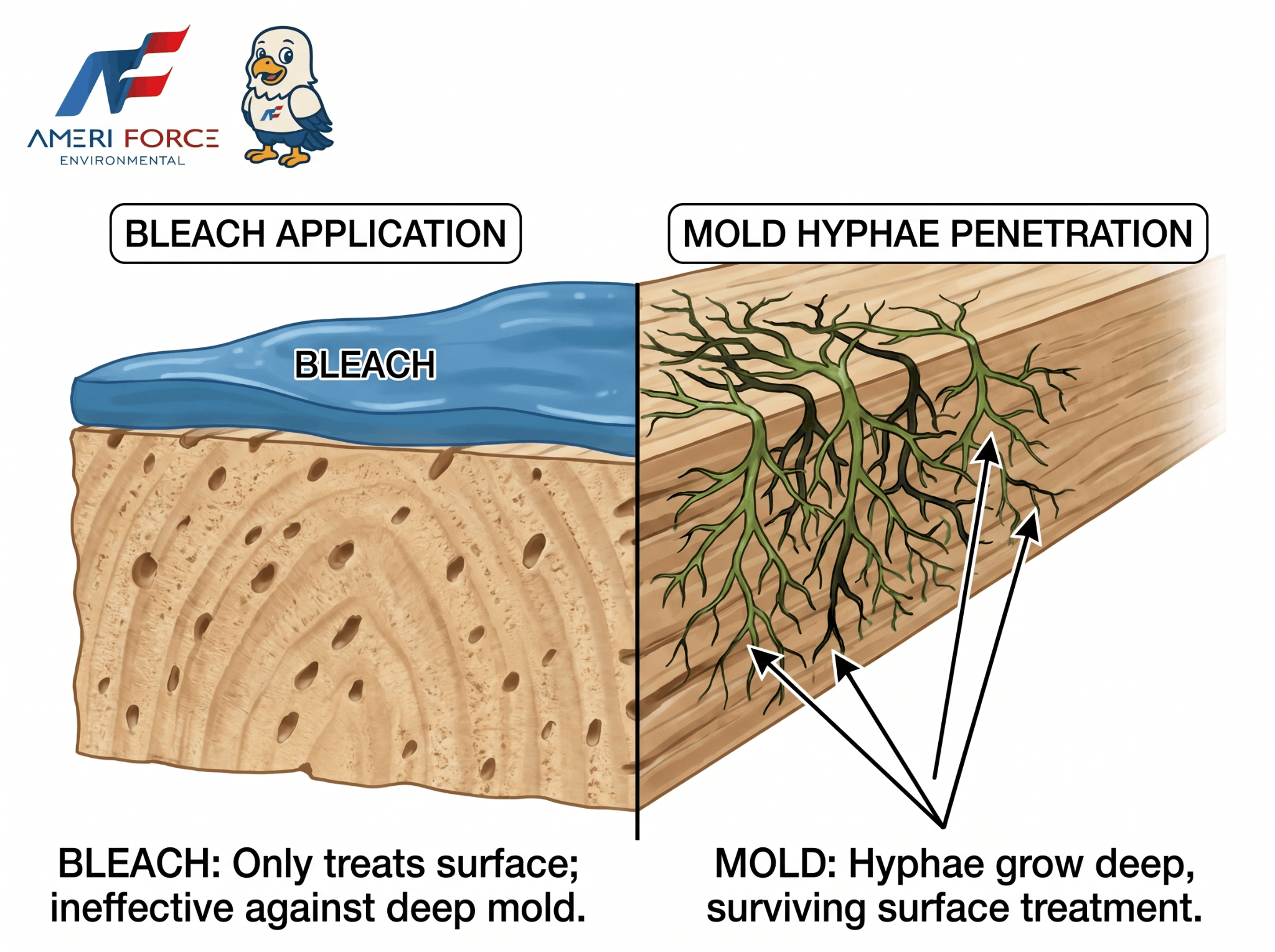
True mold removal in the Colorado Front Range requires physical removal of the mold-damaged material or high-level HEPA vacuuming—a method strictly aligned with the IICRC S520 Standard for Professional Mold Remediation. Unlike "quick-fix" chemical sprays, our process focuses on source moisture control and structural drying, adhering to EPA mold guidance to ensure long-term results rather than temporary masking.
According to CDC mold facts, addressing the moisture source is the only way to stop growth. In older Front Range properties, water damage often occurs alongside other legacy hazards; for instance, if moisture causes old paint to flake, our residential lead abatement team ensures the environment remains safe from lead dust during the cleanup, keeping your home or business compliant and your air quality protected.
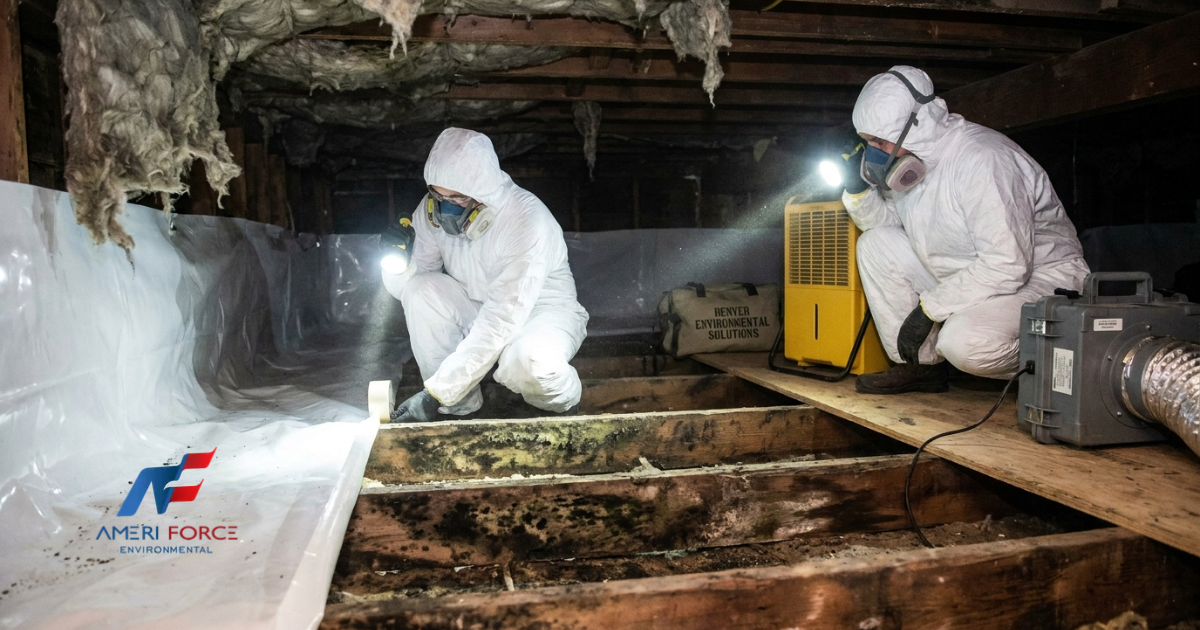
One of the most dangerous mistakes is "disturbing the mold" without a barrier. When you scrub a colony, you release millions of spores into the air. In a home with a forced-air HVAC system, those spores are quickly transported to every bedroom.
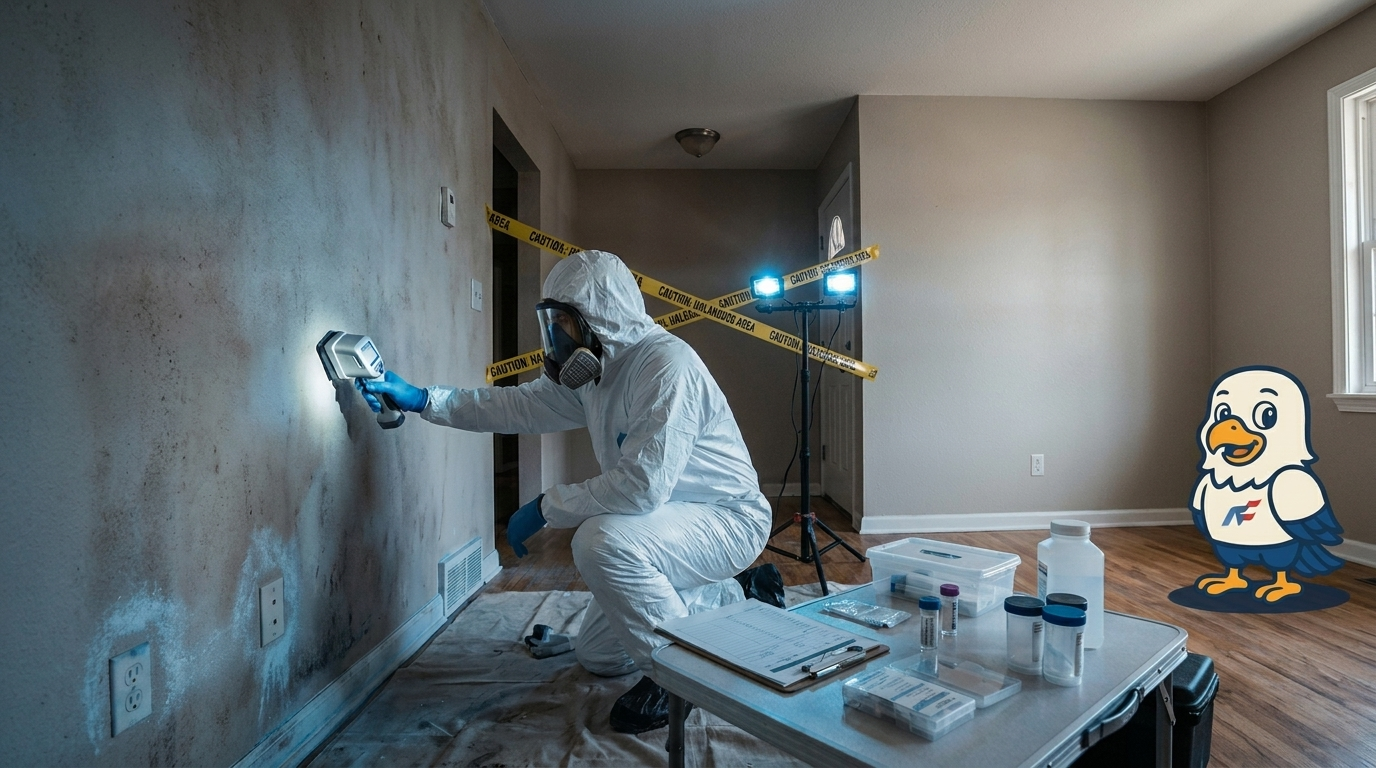
Professional mold removal in the Colorado Front Range involves strict engineering controls:
For business owners, commercial mold remediation requires even more stringent containment to protect employees and meet industrial safety standards.
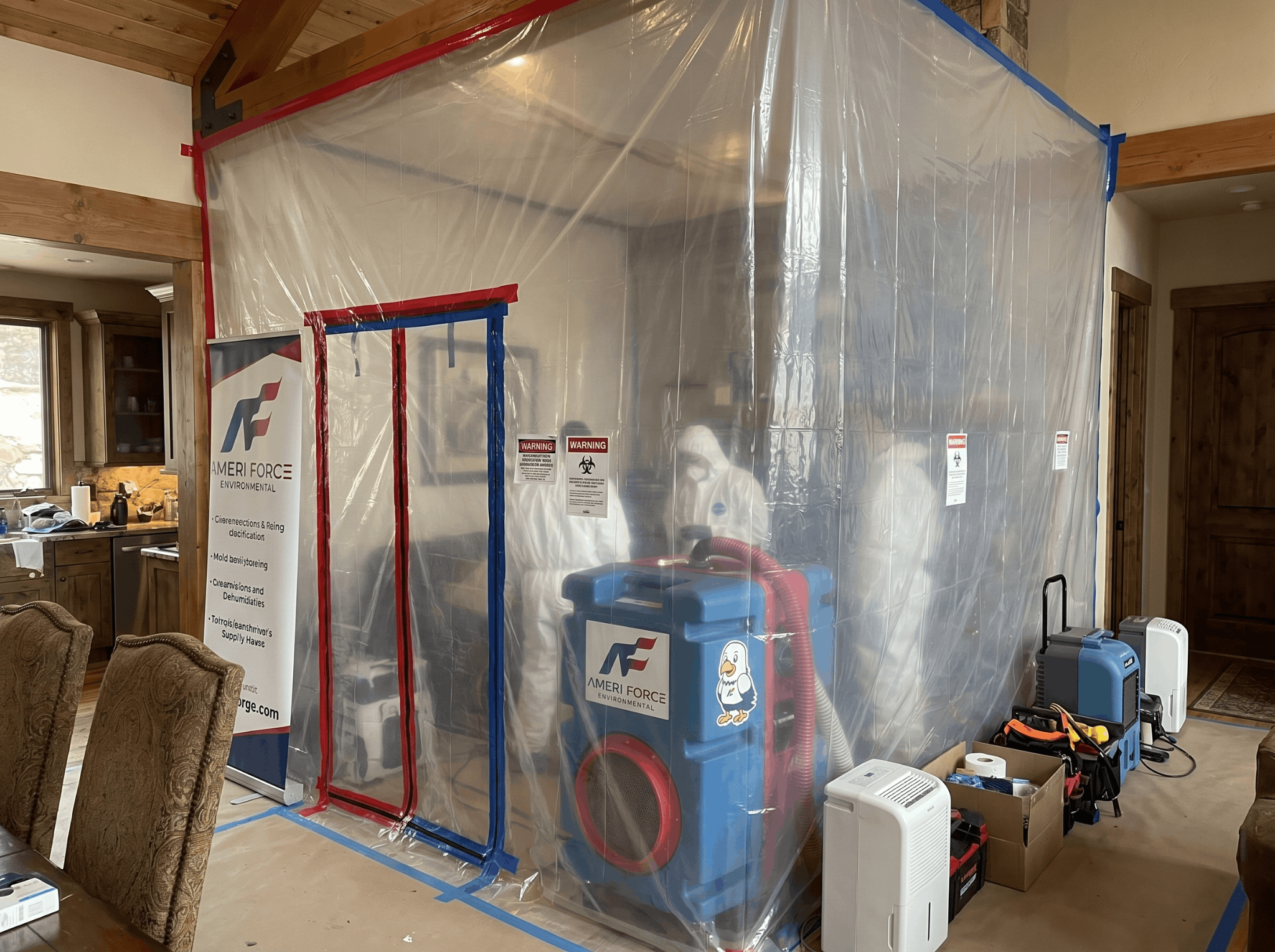
How do you know the job was actually done right? At AmeriForce Environmental, we believe in total transparency. While some companies "self-test," we advocate for independent verification to ensure your home is truly safe.
If your mold issue stemmed from a larger structural flood, you may also require residential asbestos abatement if the moisture damaged old linoleum or popcorn ceilings that often contain hazardous fibers.


In reality, "killing" mold is less effective than physical removal. While high-concentration hydrogen peroxide or specialized EPA-registered antimicrobials can neutralize spores, the only way to ensure 100% of the hazard is gone is to remove the porous materials it grew on. Even dead spores can cause respiratory issues, so professional extraction is the only true solution to ensure the space is safe for inhabitants.
The best solution is a combination of moisture control and professional remediation. You must first identify and stop the water source—whether it's a roof leak or high humidity. Once the area is dry, a professional team should use HEPA filtration and physical abrasion to remove the colony, as DIY sprays and home-remedy solutions rarely reach the root system of the fungus deep within the walls.
The toxicity level depends on the species and the individual’s health. Some molds produce mycotoxins that can cause neurological issues, chronic fatigue, and severe respiratory distress. Even "common" molds are highly allergenic, often leading to persistent coughing, itchy eyes, and exacerbated asthma symptoms for Front Range residents who might otherwise mistake these symptoms for seasonal Colorado allergies.
No house is completely mold-free because mold spores exist naturally in almost all outdoor and indoor air environments. The goal of remediation is not to achieve a "sterile" environment, but to bring the indoor spore levels down to a normal, healthy baseline that matches the natural outdoor air and to ensure no active colonies are growing inside the structure's walls or flooring.
Nothing "kills" mold permanently if the moisture source returns. Mold is an opportunistic organism; it only requires a food source and water to grow. To stop it permanently, you must maintain indoor humidity below 50% and ensure that any leaks are repaired within 24–48 hours. Professional antimicrobial treatments provide a localized shield, but long-term moisture control is the ultimate fix for a healthy home.
You should never spray bleach or straight water on mold colonies. As mentioned, bleach is mostly water and can actually encourage deeper root growth in porous materials like drywall or wood. Additionally, avoid using standard high-pressure sprayers or household fans near active mold, as this will aerosolize the spores and spread the contamination to every other room in your building via the ventilation system.
In-depth articles, safety guidance, and real-world insights on remediation and property restoration.
Discover why bleach fails at mold removal Colorado Front Range. Learn about the science of mold remediation, containment, and 3rd-party clearance testing.

Protect your property with a professional commercial asbestos inspection. Learn about HBMS surveys, Regulation 8 trigger levels, and tenant safety.
Don't let a red tag ruin your property value. Discover the step-by-step legal and physical process required for certified meth decontamination in CO.





.svg)
.svg)